The phrase appears on university websites, in consulting firm decks and in the marketing copy of organisations that have never agreed on a definition. Experiential learning. It sounds important, yet, it is rarely explained.
The term Experential travel has a specific origin. Psychologist David Kolb formalised the concept in 1984, building on earlier work by John Dewey and Kurt Lewin. His experiential learning cycle describes how learning deepens when people move through four stages: doing something, reflecting on what happened, drawing conclusions, and applying those conclusions in a new situation. The critical word is cycle. Knowledge that only passes through the first stage, encounter without reflection, tends not to stick.
when designed thoughtfully, travel can create conditions for all four stages. The doing is immediate and unavoidable. The reflection tends to happen naturally when you are somewhere quiet enough to think. The conclusions emerge. The application begins the moment you get home.
The difference between tourism and experiential travel
Not all travel is experiential travel in this sense. A heavily scheduled tour that moves a group from landmark to landmark at a pace that leaves no room for genuine encounter is tourism. Experiential learning requires enough open space for unexpected things to happen: a conversation with someone whose life looks nothing like yours, a situation you did not anticipate and had to reason through, a moment of genuine unfamiliarity that prompts you to examine your assumptions.
The best student travel programs are built around that distinction. They choose destinations with enough substance to reward attention. They build in time that is not accounted for. They offer local guidance without removing the genuine challenge of being somewhere new. The structure exists to make the experience safe and navigable. The unstructured parts are where the learning tends to happen.
What the evidence suggests
The World Economic Forum’s Future of Jobs Report 2025, drawing on data from over 1,000 employers across 55 economies, identified the five fastest growing skills in demand: resilience and flexibility, curiosity and lifelong learning, creative thinking, analytical thinking, and technological literacy. The first three are not skills that a lecture transfers. They develop through encounter with complexity, with situations that do not have a known answer, with conditions that require genuine adaptation.
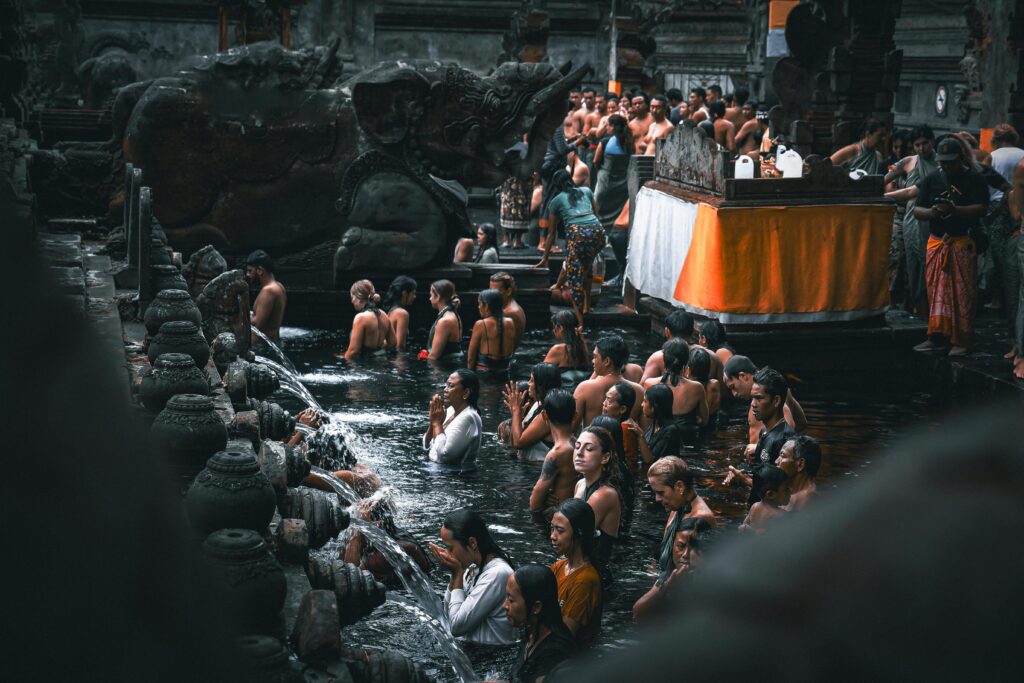
Educational trips for students and educational tours designed around experiential principles put students into exactly those conditions. An architecture student who reads about the integration of agriculture, religion and water management in Balinese culture has information. A student who spends a week in Bali observing how the subak system functions as a living design across 19,500 hectares of UNESCO-recognised cultural landscape has something closer to understanding. The difference between these two things is not small.
What this looks like in practice at Term Break
Our student travel programs are built for short-format trips of one to three weeks, designed for Indian students travelling solo or in groups. We work across four destinations in Asia currently. Each destination was selected because it offers specific, substantive learning: a city, an ecosystem, a culture, a history that rewards attention and repays observation.
A cultural travel experience of this kind is not a passive one. You come into contact with places and people that operate by different rules, different assumptions, different rhythms. What you make of that contact is yours to determine. What we offer is the structure that makes the encounter possible.
We are not making claims about what travel will do for any individual. What we can observe is that educational tours with a clear purpose, a well-chosen destination and enough room for genuine experience tend to be the ones people talk about years later. The ones where something shifted, even if they cannot immediately quantify.
Leave a Reply