Category: Educational

  • The Rise of Learning-Led Travel: Why Experiential Learning Matters

    The phrase appears on university websites, in consulting firm decks and in the marketing copy of organisations that have never agreed on a definition. Experiential learning. It sounds important, yet, it is rarely explained.

    The term Experential travel has a specific origin. Psychologist David Kolb formalised the concept in 1984, building on earlier work by John Dewey and Kurt Lewin. His experiential learning cycle describes how learning deepens when people move through four stages: doing something, reflecting on what happened, drawing conclusions, and applying those conclusions in a new situation. The critical word is cycle. Knowledge that only passes through the first stage, encounter without reflection, tends not to stick.

    when designed thoughtfully, travel can create conditions for all four stages. The doing is immediate and unavoidable. The reflection tends to happen naturally when you are somewhere quiet enough to think. The conclusions emerge. The application begins the moment you get home.

    The difference between tourism and experiential travel

    Not all travel is experiential travel in this sense. A heavily scheduled tour that moves a group from landmark to landmark at a pace that leaves no room for genuine encounter is tourism. Experiential learning requires enough open space for unexpected things to happen: a conversation with someone whose life looks nothing like yours, a situation you did not anticipate and had to reason through, a moment of genuine unfamiliarity that prompts you to examine your assumptions.

    The best student travel programs are built around that distinction. They choose destinations with enough substance to reward attention. They build in time that is not accounted for. They offer local guidance without removing the genuine challenge of being somewhere new. The structure exists to make the experience safe and navigable. The unstructured parts are where the learning tends to happen.

    What the evidence suggests

    The World Economic Forum’s Future of Jobs Report 2025, drawing on data from over 1,000 employers across 55 economies, identified the five fastest growing skills in demand: resilience and flexibility, curiosity and lifelong learning, creative thinking, analytical thinking, and technological literacy. The first three are not skills that a lecture transfers. They develop through encounter with complexity, with situations that do not have a known answer, with conditions that require genuine adaptation.

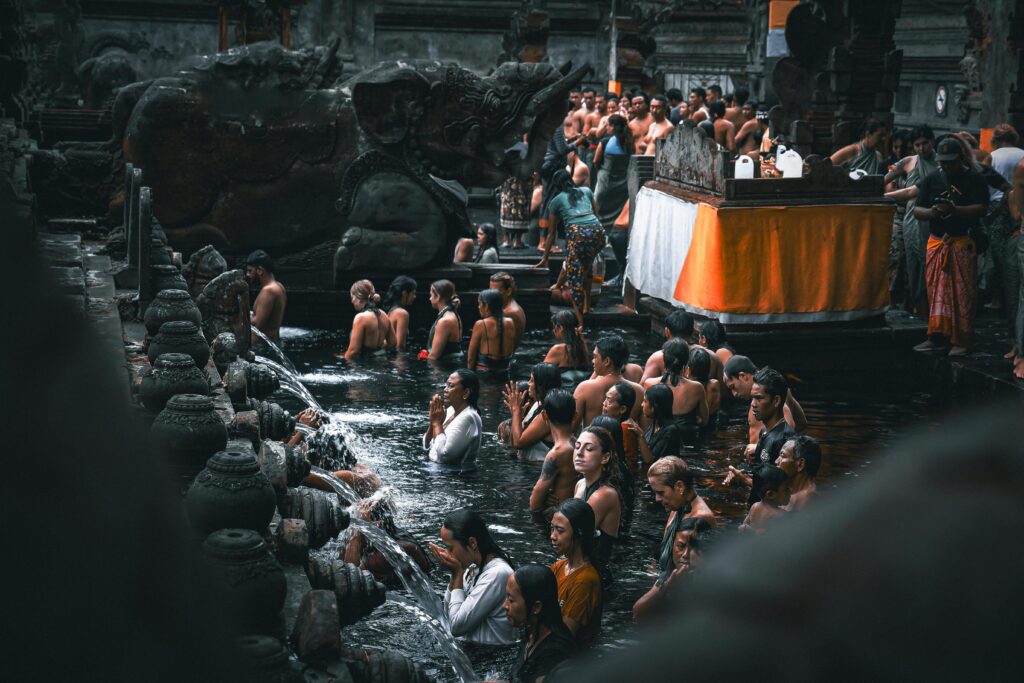
    Educational trips for students and educational tours designed around experiential principles put students into exactly those conditions. An architecture student who reads about the integration of agriculture, religion and water management in Balinese culture has information. A student who spends a week in Bali observing how the subak system functions as a living design across 19,500 hectares of UNESCO-recognised cultural landscape has something closer to understanding. The difference between these two things is not small.

    What this looks like in practice at Term Break

    Our student travel programs are built for short-format trips of one to three weeks, designed for Indian students travelling solo or in groups. We work across four destinations in Asia currently. Each destination was selected because it offers specific, substantive learning: a city, an ecosystem, a culture, a history that rewards attention and repays observation.

    A cultural travel experience of this kind is not a passive one. You come into contact with places and people that operate by different rules, different assumptions, different rhythms. What you make of that contact is yours to determine. What we offer is the structure that makes the encounter possible.

    We are not making claims about what travel will do for any individual. What we can observe is that educational tours with a clear purpose, a well-chosen destination and enough room for genuine experience tend to be the ones people talk about years later. The ones where something shifted, even if they cannot immediately quantify.

  • Why Indian students should consider a term break before starting their careers, much like their western counterparts

    The gap year has been a fixture in British and Australian student culture for decades. UCAS data shows that around 30,000 UK students defer their university place every year to travel, volunteer or work abroad. In Australia, taking time between school and university or between graduation and work is common enough that it barely needs explaining. In the United States, awareness has grown steadily too: a 2023 survey of American high school counsellors found that 45 percent said students are now more aware of the gap year option than they were three years ago.

    None of this means the model translates directly to India. The financial realities are different. Family expectations are different. The structure of higher education, with its competitive entrance pathways and placement driven outcomes, does not leave much room for a year off. That is a real constraint, not a cultural failing.

    But the underlying question that a gap year tries to answer is one that Indian students are asking too. What happens between the end of education and the beginning of a career? And is stepping directly from one to the other always the right choice?

    What the research on gap year travel suggests

    The State of Student and Youth Travel in 2024, published by Student Universe and drawing on surveys of 6,000 Gen Z respondents across the UK, US, Canada and Australia, found something worth sitting with. 79 percent said they would take a trip with the main intention of making themselves more employable. 87 percent believed travel experience would improve their job prospects. These are not idealists talking about finding themselves. They are young people making a practical argument.

    What they are describing is the difference between education as knowledge transfer and education as preparation. Most formal education does the first very well. The second, particularly the kind that comes from navigating unfamiliar places independently, is harder to build into a curriculum.

    A KILROY survey of 1,000 UK respondents aged 18 to 27 found that 87 percent agreed that travel positively impacts their wellbeing. Only 6 percent said they were interested in gap years primarily for social reasons. The majority cited personal growth and cultural immersion as their main goals. The image of gap year travel as a long party abroad has largely been replaced, at least in the data, by something more considered.

    The Indian version of this idea

    For most Indian graduates, a full year abroad is not a realistic option. The term break offers a shorter, more practical version of the same underlying idea. A few weeks, sometimes a couple of months, taken between the end of college and the start of a first job. Enough time to go somewhere genuinely new, to have experiences that cannot be replicated in a classroom, and to return with something that takes longer to describe than a certificate but that most people who have done it say they can feel.

    Some choose solo travel. Navigating an unfamiliar city independently, making decisions without a safety net, adapting when plans change: these experiences build a particular kind of confidence that structured environments rarely develop. Others prefer group travel, where shared experiences create a different kind of learning. The conversations that happen at the end of a day spent somewhere genuinely new tend to go to places that campus discussions rarely reach.

    What a term break is not

    It is worth being clear about what this is not. A term break is not a suggestion that Indian graduates lack something their western counterparts have. It is not a claim that travel fixes anything. And it is not an argument that everyone should go.

    It is, more simply, an observation. There is a window of time between graduation and first employment that most people spend waiting. For those who are curious about the world, that window has value. Student travel programs and educational tours can help make that time into something more than a pause between chapters.

    The data from western markets suggests that young people increasingly see travel not as a reward but as a form of preparation. Whether that framing resonates with Indian graduates is something each person works out for themselves. What Term Break offers is the infrastructure to make student trips and educational tours accessible, safe and worth the time.