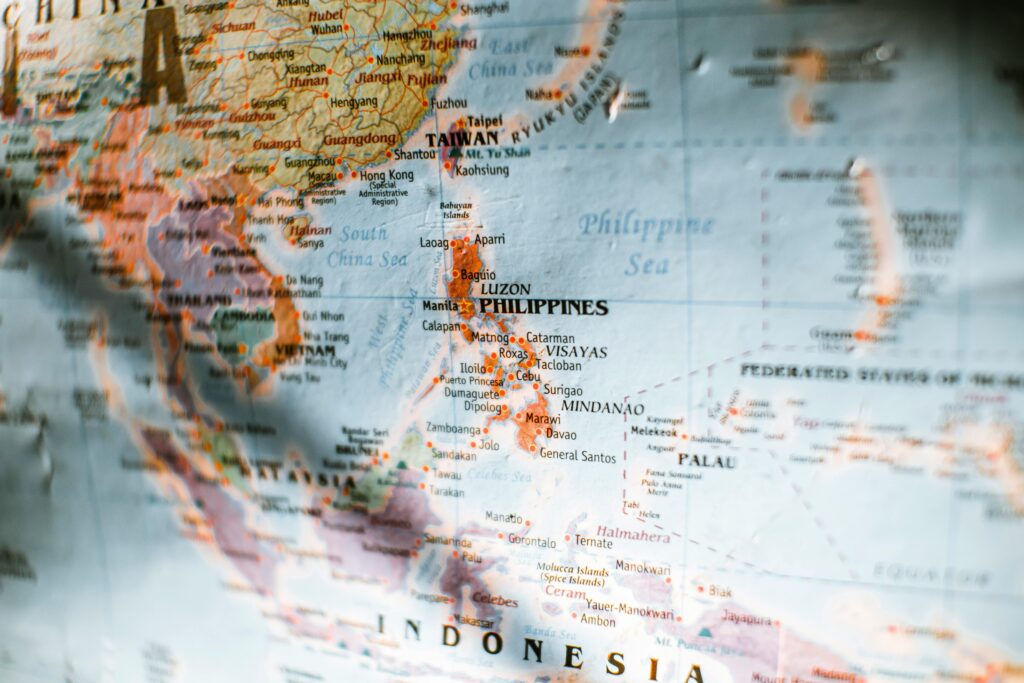
Choosing where to go is not an easy decision. The right destination for a short-format trip is one where the return on attention is high: where what you encounter is substantive enough to be worth the time and cost of getting there, and different enough from your everyday experience to actually change something about how you see.
Here is what each of our four destinations offer, and the kind of learner that tends to get the most out of each.
Bali: culture as a living system
Bali is one of the most visited islands in Southeast Asia, and Bali tour and packages attract millions of travellers every year. But behind the well-documented beauty is something less commonly described: an integrated cultural system that has been operating continuously for over a thousand years.
UNESCO’s Cultural Landscape of Bali covers 19,500 hectares and is organised around the subak, a cooperative water management network of canals, weirs and temples rooted in the Balinese philosophical principle of Tri Hita Karana: the idea that human wellbeing depends on maintaining harmony with the spiritual world, the natural world, and other people simultaneously. Places to visit in Bali like the Tegalalang and Jatiluwih rice terraces are entries into this system, not merely scenic backdrops.
For students of architecture, design, environmental science, anthropology or sustainability, Bali offers a rare opportunity to observe how a philosophical principle becomes physical infrastructure. You begin by noticing beauty. With time and attention, you start reading the landscape differently.
We offer bali tours designed for solo travellers and small groups, with itineraries that balance structured learning with genuine open time. The Monkey Forest in Ubud, the royal compound of Ubud Palace, the cliffside temple of Uluwatu, the sculpted calm of Tegalalang: these are places to visit in Bali that work as experiences rather than checkboxes, if approached with curiosity.
Ho Chi Minh City: history and energy, together
Saigon does not ease you in. Ho Chi Minh City is fast, layered and immediate. It carries more than 300 years of documented urban history while simultaneously reinventing itself in public. The Reunification Palace, where the Vietnam War concluded on 30 April 1975, stands within walking distance of co-working spaces full of startup founders. The Cu Chi Tunnel tours take you underground into one of the most astonishing feats of wartime engineering and collective endurance in modern history. The Ho Chi Minh City Opera House, built in 1897 during French colonial administration, continues to function as a performance venue.
For students of history, urban studies, food culture, media, economics or political science, Ho Chi Minh City offers a density of material that is genuinely difficult to exhaust. A morning inside Ben Thanh Market is a practical education in supply chains, migration and informal economies that no case study replicates. The city demands engagement and rewards it with depth.
Solo travel experience in Ho Chi Minh City tends to be formative in a specific way. The city is navigable enough to move through independently but unfamiliar enough to require genuine attention. You cannot be passive here and that, more than any scheduled activity, is what makes it valuable for student trips.
Chiang Mai: attention and craft
Chiang Mai, Thailand sits in the mountainous north of the country and operates at a pace that is noticeably different from Bangkok or any major Southeast Asian metropolis. It is home to over 300 Buddhist temples. Wat Phra That Doi Suthep, founded in 1383 and sitting 1,073 metres above the city, is the most visible. Wat Chedi Luang in the old walled city hosts evening monk chats, informal conversations open to visitors. Chiang mai attractions extend from the spiritual to the ecological: Doi Inthanon National Park, Thailand’s highest peak at 2,565 metres, is 58 kilometres southwest of the city and contains cloud forest ecosystems found nowhere else in the country.
The craft village network along San Kamphaeng Road sustains living production in umbrella making, silverwork, woodcarving and silk weaving. The elephant sanctuaries operating under ethical conservation principles offer a direct encounter with questions about human responsibility toward wildlife that are difficult to access anywhere else. Things to do in Chiang Mai, Thailand span a genuine range, from the contemplative to the physically demanding.
For students interested in religion, philosophy, design, material culture, ecology or food, Chiang Mai offers a specific kind of return on slow attention. The cooking classes here are among the best in the region because the best ones begin in a morning market and teach you the supply chain before you touch a knife. Chiang mai is also a practical base for a day trip to Chiang Rai, where Wat Rong Khun, the White Temple, is one of the most remarkable contemporary architectural works in Southeast Asia, with searches for it growing 235 percent year on year.
Palawan: ecological scale
Palawan in the Philippines is a different register entirely. The Palawan Biosphere Reserve covers over 1.15 million hectares and includes more than 1,700 islands. The Puerto Princesa Subterranean River is a UNESCO World Heritage Site, an 8.2-kilometre underground river system that runs through a cave before reaching the sea. El Nido, Palawan, Philippines is one of the most biodiverse marine environments in the Coral Triangle, which contains approximately 76 percent of all known coral species on the planet. Coron, Philippines offers some of the world’s most celebrated wreck diving.
What Palawan offers that other destinations do not is a direct encounter with scale. The ecosystems here are large, complex and largely independent of human planning. For students of environmental science, sustainability, marine biology or conservation, the difference between reading about the Coral Triangle and standing at its edge is categorical, not incremental.
Our island Palawan Philippines itineraries are designed for small groups and solo travellers who want more than a beach holiday. The destination repays genuine curiosity and has a way of shifting how you think about travel.
Choosing your destination
Each of these destinations teach something specific. Bali shows us how a philosophy can become a landscape. Ho Chi Minh City shows us how history and ambition coexist. Chiang Mai shows us what sustained attention produces. Palawan shifts our sense of scale. Educational tours work best when the destination is chosen with some intention about what you want from it and term break can help with that.